City of Abilene Highlights “See/Click/Fix” Work Crews
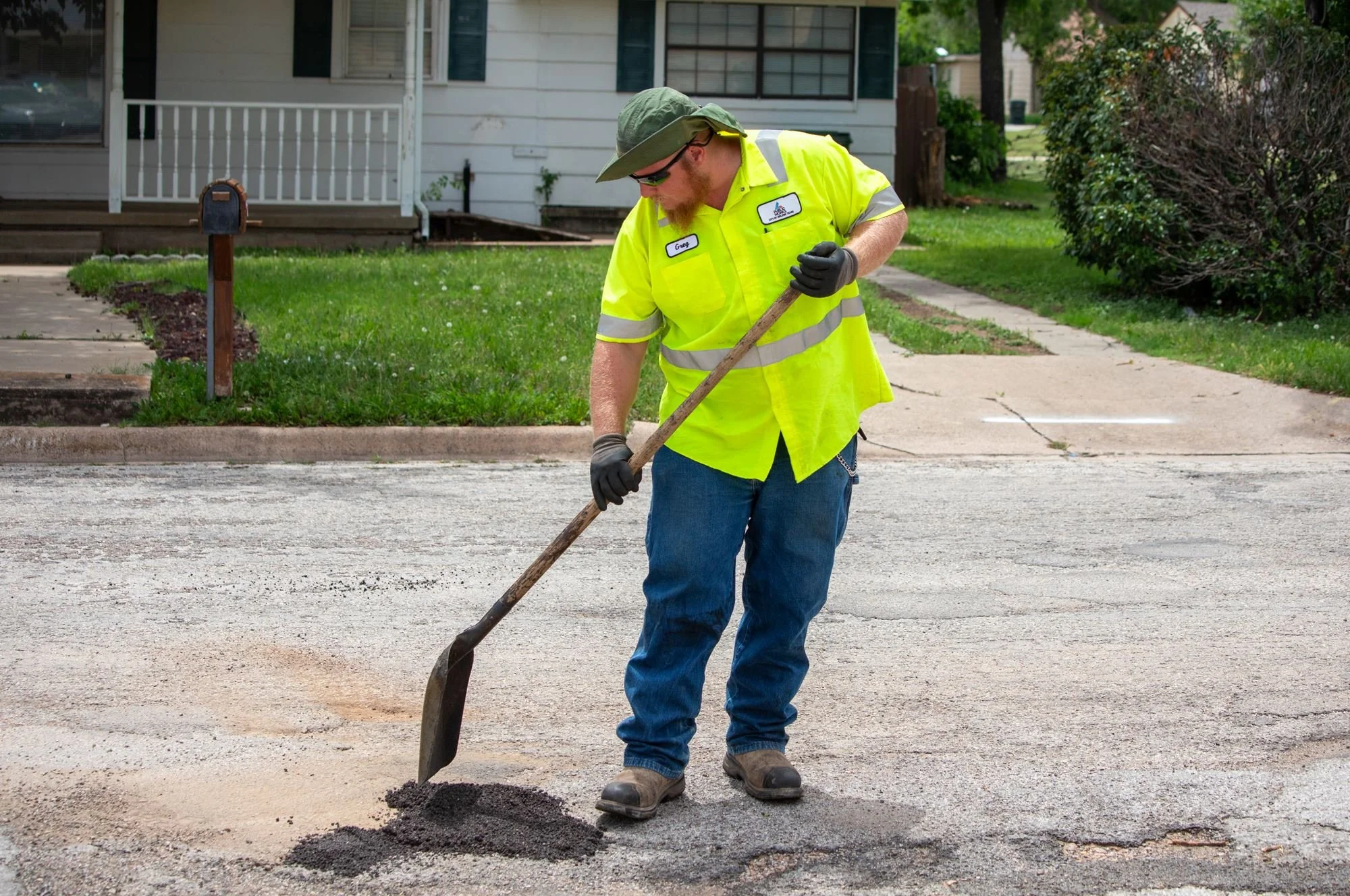
A pothole report may start with a few taps on a phone.
A missed trash pickup might begin with a quick photo and a short note.
An illegal dumping complaint may come in from a resident who simply wants their neighborhood cleaned up.
But once those reports are submitted, they do not vanish into a faceless computer system. They land in front of real City of Abilene employees, people who read the requests, relay them to the right place and route crews into the field.
SeeClickFix is now part of the City of Abilene Mobile App, giving residents one place to report non-emergency concerns, access city services and stay connected with local government.
“We handle several categories in SeeClickFix, with the most common being potholes, street repairs and alleyway damage or problems,” said Cynthia LaBrenz with Street Services. “Potholes are by far the most frequent request we see. It’s rare for a day to go by without at least one report coming in.”
In addition to submitting service requests, residents can use the app to pay bills, receive push notifications, watch City Council meetings, access Parks and Recreation information, explore Abilene Public Library services, report minor crimes and find ways to get involved in the community.
A direct line to City crews
For Street Services, the app is also a way to find problems employees may not otherwise know about.
“We don’t have the manpower to drive every road in town every day,” said David Rodriguez with Street Services. “Unless we’re told about it, we don’t know about it.”
When a request is submitted, Street Services is notified by email. For potholes, SeeClickFix is connected directly to the City’s OpenGov work-order system.
“Each pothole report automatically generates a work order in OpenGov, which is then visible to Admin, Supervisors and our field staff,” LaBrenz said. “So, the entire team is aware of it right away.”
Rodriguez said those work orders are also visible to employees working in the field, who carry iPads and update requests as they move from one job to the next.
“They’re constantly updating the list,” Rodriguez said.
As crews finish a job, they enter information such as labor hours, equipment and materials used. Once the task is complete, crews close out the work order, which also closes the SeeClickFix request and sends a notification back through the system.
Rodriguez said crews also try to work efficiently by checking for nearby requests before driving across town.
“They’ll update their list to see what’s next, to see if there’s anything close to them that they can go ahead and take care of, as opposed to driving back and forth across town,” Rodriguez said.
From request to repair
Response times can vary depending on severity, staffing, materials and weather, but potholes are a priority.
“For potholes, we aim to address them within 24 hours, depending on volume and available resources,” LaBrenz said. “Street repairs are prioritized by severity. Some are added to our repair list, and emergency issues are handled as quickly as possible.”
Rodriguez said some pothole requests can be handled even faster.
“There’s times whenever we get them answered within an hour,” Rodriguez said. “But we try to have them taken care of within 24 hours.”
In some cases, he said, it may take up to 72 hours, depending on the severity of the issue, available manpower, materials and weather.
If a pothole is underwater, for example, crews may not be able to repair it until they can see it and safely address it.
Details make a difference
LaBrenz said the system works best when residents give staff the information they need to find the problem.
“One important thing we always emphasize to citizens is the need for accurate locations and detailed descriptions,” she said. “Our staff often have difficulty finding the issue simply because the information provided is incomplete.”
A photo, cross street, house number, landmark or clear description can make a difference.
“The more precise the details, the faster and more effectively we can get the problem fixed,” LaBrenz said.
Rodriguez agreed, saying the more specific a report is, the easier it is for crews to find the problem.
“Some will report them from their home, but they’re talking about a pothole that they passed across town,” Rodriguez said. “The more specific they can be, the easier it is for us to find.”
Photos can help, too, but Rodriguez said they work best when crews can see more than just a tight close-up of the pothole.
“If they were zoomed out a little bit, and we could see an intersection or a house or something like that, it makes it a little easier for us to find things,” Rodriguez said.
Behind the work
Rodriguez said it is also important for residents to understand that street work is a process, even when that process is not always obvious from a passing vehicle.
Sometimes, he said, crews may be waiting for a truck to bring materials, waiting for another truck to haul away bad material, or moving through steps that have to happen in a certain order.
“We’re not just standing around just to stand around,” Rodriguez said.
Crews want to finish work as quickly and efficiently as possible, too.
“We want to get finished as quickly as possible and as efficiently as possible, so we can go home as well,” Rodriguez said. “We have families and whatnot that we want to go home to.”
That is one of the reasons Street Services values SeeClickFix as a reporting tool. It gives residents a way to alert the City to problems, and it gives crews a better chance to find and fix them.
“I think it’s a great resource for us to get informed about these things,” Rodriguez said.
More than potholes
While potholes may be the most familiar use of SeeClickFix, they are far from the only concern residents report.
“Code compliance issues are a close second,” said City Secretary Shawna Atkinson.
Atkinson said the platform also regularly receives reports involving deceased animals, illegal dumping and solid waste service requests, such as missed trash pickups or container maintenance issues.
Then there is the “other” category, where residents can report concerns that do not fit neatly into one of the listed options.
“We sometimes get some interesting ones there,” she said.
Those requests are part of what makes the system feel less like software and more like a conversation between residents and the City.
Sometimes that conversation leads to a repair. Sometimes it leads to a reminder about which agency handles a particular service. Sometimes it helps staff explain what the City can and cannot address.
Some questions fall under the category of “frequently asked,” Atkinson said.
“Two common things that we get reports and phone calls on a lot: You can have roosters inside the city limits, even if they crow, and AEP is responsible for streetlights, not us,” Atkinson said.
Know when to call instead
Atkinson said one of the most important things residents should understand is that SeeClickFix is designed for non-emergency issues.
“It is not monitored 24/7,” Atkinson said. “So, if you are trying to report something urgent like a large water main break or a fire, it may not be the best way to report that.”
The same is true for issues that need to be witnessed while they are happening, such as loud music, barking dogs or cars drag racing.
For those requests, people should call the non-emergency number at the police department, 325-673-8331, as it is happening, Atkinson said.
Real people behind every request
For residents, SeeClickFix is a simple way to report what they see.
For City employees, each request represents something more specific: a location to check, a crew to dispatch, a resident to update, or a problem to solve.
Behind every completed request are the people who answer the emails, read the descriptions, look for the potholes, route the reports and do the work to keep Abilene running.
